
SEO for ChatGPT: How I rank websites in ChatGPT Search
Today, I checked to see if my client was ranking on Google since I rewrote her website copy back in March 2025 (it’s currently August 1, 2025).
And because I’m like real-lay real-lay good at my job… she is!
She even shows up SECOND in the AI overview:
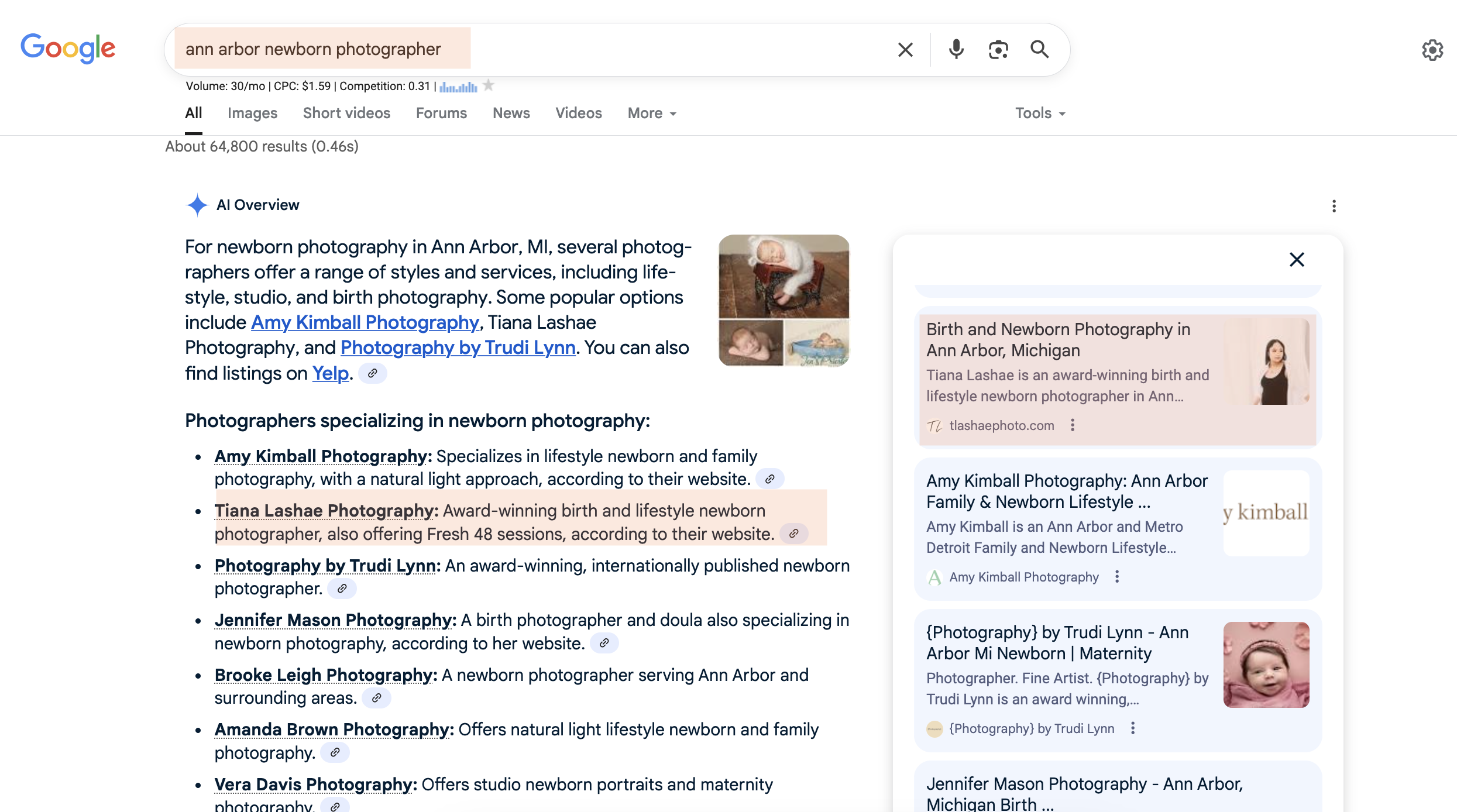
Which got me thinking… does she show up when I search on ChatGPT?
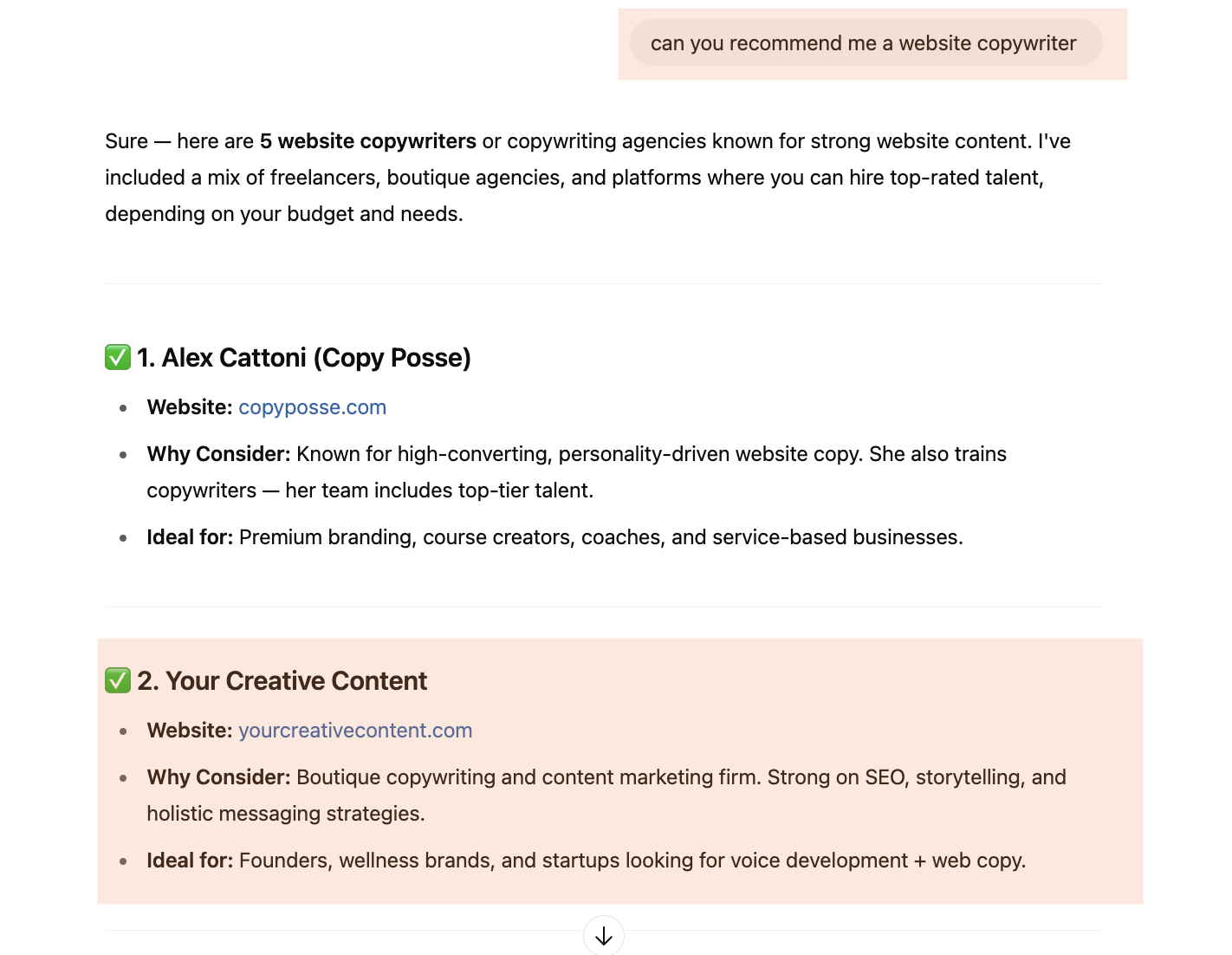
And would ya look at that!
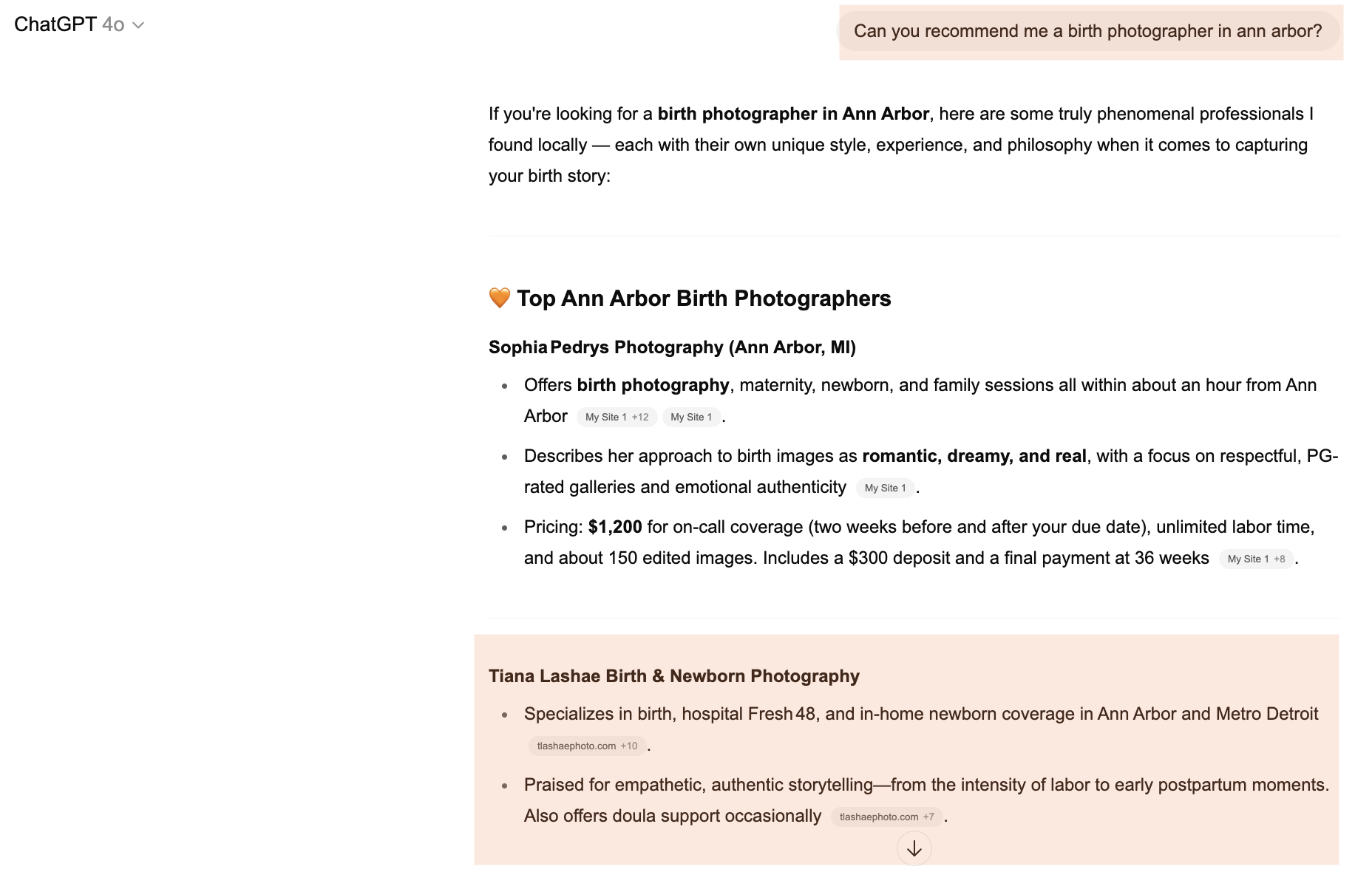
She’s even listed ABOVE her main competitor who we were trying to outrank:
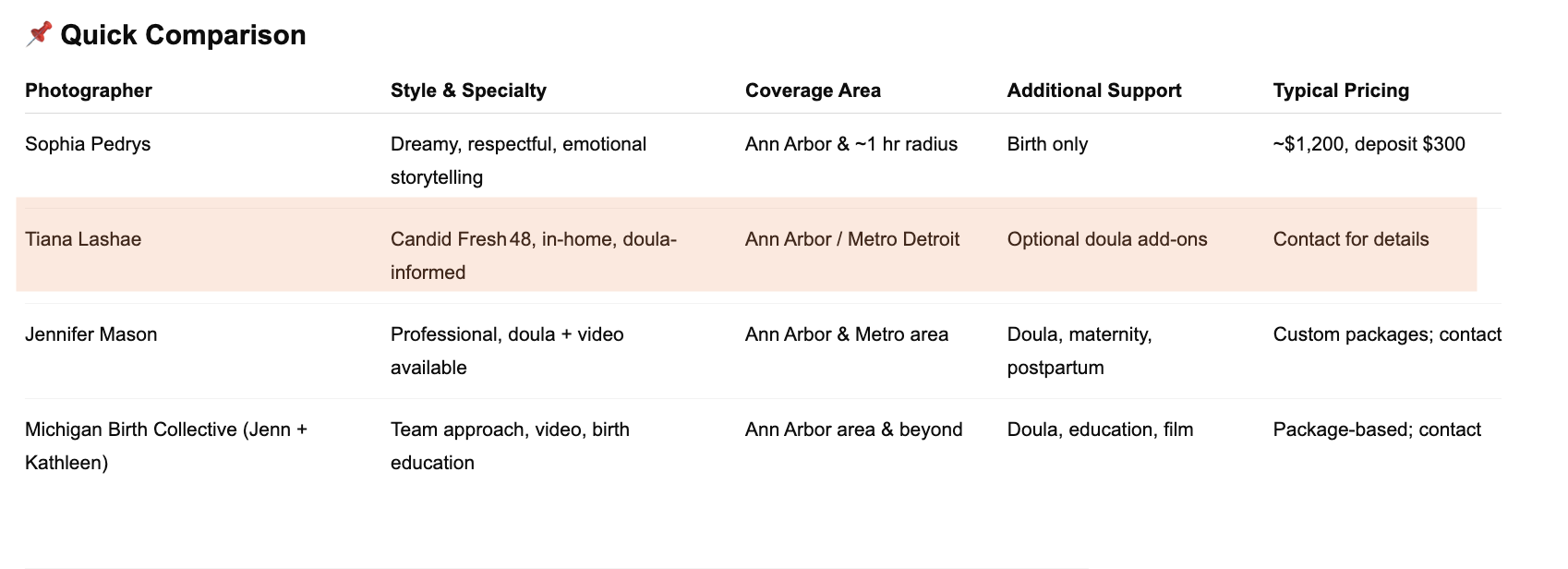
Naturally, this sent me into a frenzy to see how many of my clients rank in ChatGPT results when I ask for recommendations.
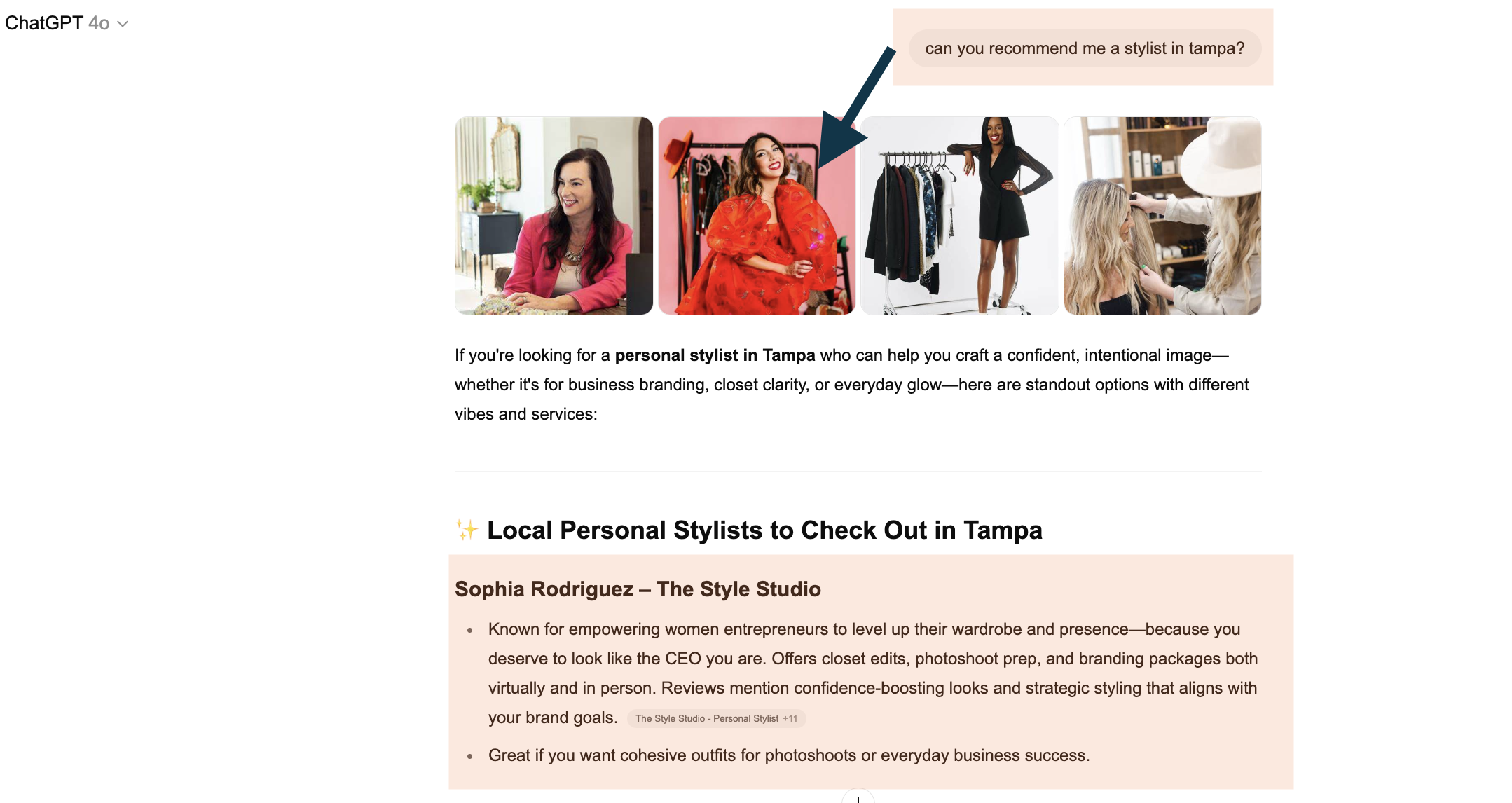
I haven’t been able to check ALL of them, but so far? We’re at 5 websites in ChatGPT search (including MYSELF?!).
(AND I made sure to use Chat in another browser so it wasn’t biased).
So… wanna know how I did it?


SEO for ChatGPT vs Website SEO: Is there any difference?
In my opinion, not really.
If you want your website to get recommended by ChatGPT, you have to:
Be very clear in your copy about who you are, what you do, and who you do it for.
Write your Home, Services, and About page website copy so it reads like you’re talking to a friend… not giving a lame corporate presentation (that’s making everyone at the conference table fall asleep).
Pick a keyword for each of those pages that people actually search for. Nobody is searching for “Social Media Savant,” they’re searching for “social media manager for creatives.”
I don’t know why SEO strategists try to make it seem like SEO is soooo techy and difficult.
It’s really not.
How to rank your website in ChatGPT results
I’m gonna be real with you:
I didn’t do ANYTHING different in my SEO strategy to get all of these websites to rank in ChatGPT search.
I just did what I always do:
Step 0: Make sure you give Google/ChatGPT permission to rank you
For most websites, search engine indexing is turned on by default.
However!
Squarespace specifically asks you to turn on the green toggle for your website to appear in ChatGPT:
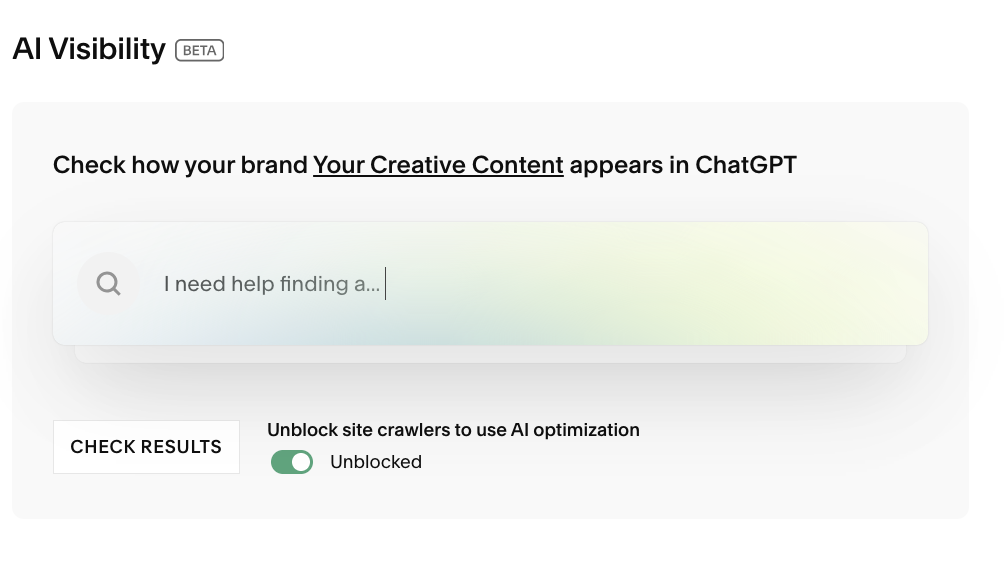
Squarespace AI visibility path
Pages → SEO/AI Visibility → Manage ✅ Toggle “Unblock site crawlers to use AI Optimization”Squarespace search visibility path
Settings → Website → Crawlers → ❌ Uncheck Block Search Engine Crawlers and Block Known Artificial Intelligence CrawlersWordPress
Settings → Reading → (Scroll) → ✅ Uncheck “Discourage search engines”Showit
Page → Advanced Settings → ❌ Uncheck “Ask Google to ignore this page”Wix
Pages & Menu → More Actions → SEO Basics → 🔛 Let search engines index
Step 1: Competitor Analysis
When I onboard my clients, I ask them to send me 3 websites they admire and/or 3 brands they consider their competition. Usually, my clients send me their peers who have 50K+ Instagram followers.
From there, I do a tiny SEO audit on their competitors to see what keywords their website ranks for
SPOILER ALERT! Most of the “competitors” my clients send me have ZERO SEO on their website and are barely getting website clicks.
Which goes to show you that just because a brand has a lot of followers doesn’t mean they’re getting a lot of business!
This usually means do competition research on 3 MORE websites… the ones that actually rank on Google and show up in ChatGPT.
Step 2: Keyword Research
Step one kinda naturally bleeds into step 2 because the companies I find on Google usually have a ton of keywords they rank for.
So what do I do?
I steal them.
I’ll see which keywords my client’s competitors are ranking for, checkmark each one that looks interesting, and create a Keyword List for my client.
Step 3: Website Copywriting
Once I know which keywords I want my client’s website pages to rank for, I outline their copy using my SEO copywriting template. Here’s what that process looks like:
Fill in the “Fill-in-the-blank SEO” section (the page Title, Meta Description, URL, secondary keywords, internal and external links I’ll need, CTA, etc)
Write the headlines for each section of each page for those website skimmers (you’re skimming this blog right now, aren’t you?!) & decide how many of them will include the target keyword or secondary keyword.
Do my first rough draft of the website copy based on my client’s brand voice and personal story (which I know because I have them fill out this custom Business Book that I created, which lets me know things like do they like to use ALL CAPS FOR EMPHASIS and whether they’ve emotionally recovered from their middle school talent show incident).
Step 4: Reviews & Backlinks
When you think you’re ready to buy something, what do you do?
That’s right— ya look at the reviews.
You Google the product. You search Reddit. You ask your group chat. You spiral.
ChatGPT basically does the same thing.
It pulls in websites that are trustworthy, have good content, and are getting talked about online.
Which is why you want:
Google Reviews (yes, even if you're not a local biz)
Backlinks (aka other legit websites pointing to yours)
Not shady backlinks you buy from some sketchy Fiverr seller named “SEO_GOD_420,” but actual links from podcasts you’ve guested on, blogs you’ve been featured in, or even testimonials on collab pages.
The more signals ChatGPT sees that say, “Hey, people are talking about this brand,” the more likely it is to recommend your website.
Step 5: Create SEO Content
Now that your website is optimized, it’s time to create content that makes your site stickier than a Florida summer.
(and as a Florida native, lemme tell you… that’s sticky as hell)
This is the part where everyone sighs and goes,
“Ughhh, do I really have to blog?”
Short answer: no, but kind of yes.
You don’t have to blog every week like it’s 2012. You do need some long-form content that answers the questions your dreamy clients are asking.
Because guess what?
ChatGPT reads that stuff. Google reads that stuff. And if you do it right, your leads will, too.
So, whether it’s a blog, podcast show notes, or a juicy FAQ page, just make sure:
You’re targeting one keyword per post/page.
You’re using natural language, not robotic SEO nonsense like “best holistic productivity coach entrepreneur female 2025.”
You actually sound like you. (Because if I wanted a snoozefest, I’d read the Terms & Conditions.)
TL;DR: SearchGPT is simpler than you think
Google SEOO, ChatSEO, SearchGPT… whateva you wanna call it… it’s all the same thing. There’s no secret portal or magic hack.
The real trick?
Write like a human.
Pick good keywords.
Get reviews.
Post content that’s actually helpful.
And if you want me to help you do all of this? You know where to find me 😉