
How many keywords should I use for SEO? The simple answer.
Y’all, I’m gonna make this stupid simple.
You should be using your keyword 3 times per 500 words for your blog.
How do I know?
Because I literally made it up.
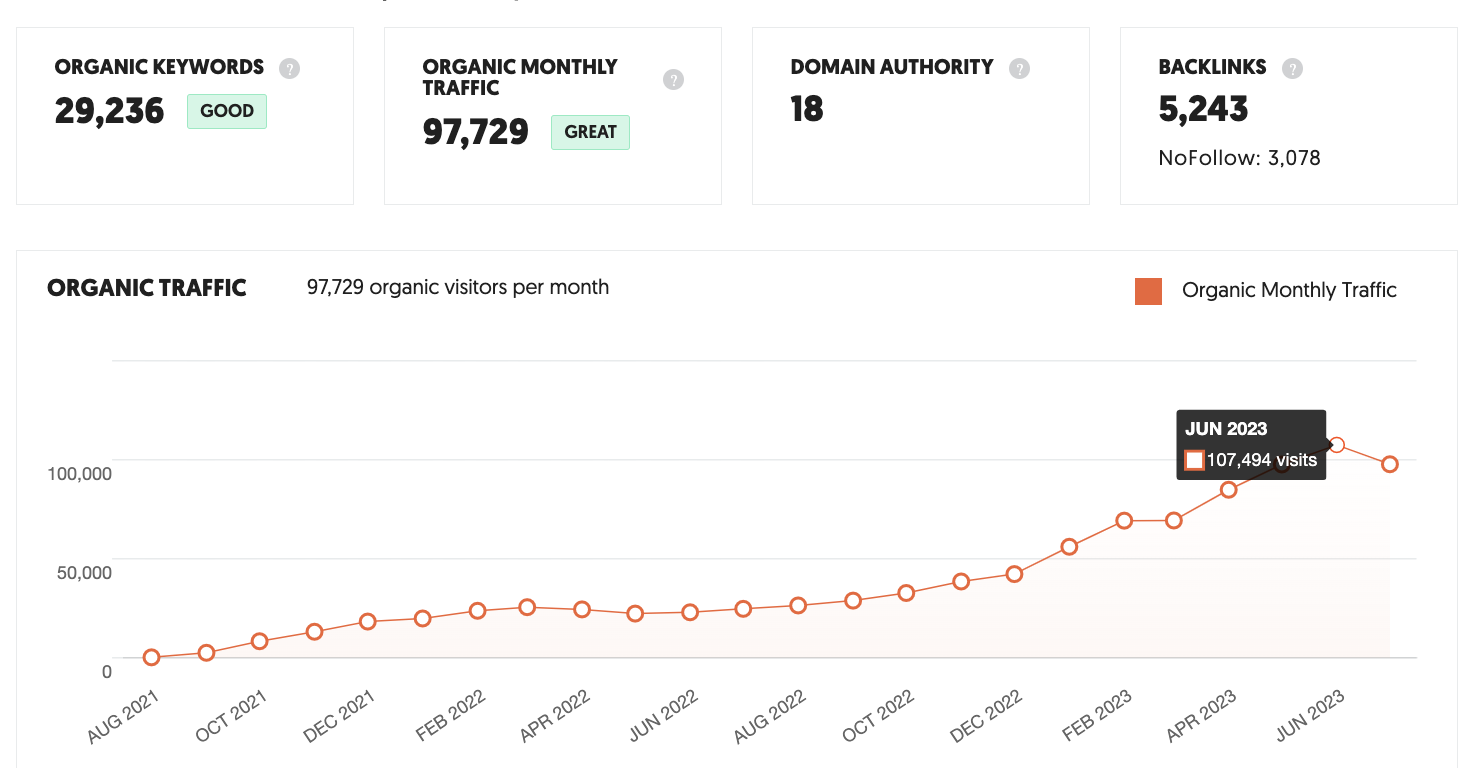
This is the rule of thumb I’ve been using since 2019, which has helped me get my clients anywhere from 10K-100K monthly website visits.
And that’s just posting one blog per week (sometimes less).

Here’s the TLDR;
WTF are keywords?
Keywords are the words you type into a search bar whenever you’re looking for something.
Whether you type those words into the Google, ChatGPT, TikTok, Instagram, Pinterest, YouTube, or Spotify search bar doesn’t matter.
If ya wanna know more about keywords than you probably care to know, I have a short video series called WTF are Keywords, which you can watch on Instagram here or here on TikTok.
There are 7 types of keywords you need to know

#1: Informational keywords
Where to use them: Content
Goal: To educate or entertain
Informational keywords are the ones you use when creating content — blogs, YouTube videos, podcasts, TikToks, etc. They’re what people type into Google when they’re trying to learn something.
Examples:
how to breathe during a deadlift
dinner party ideas
Most blog keywords? Informational. Most TikTok how-tos? Also informational.
#2: Long-tail keywords
Where to use them: Content
Goal: To reach more of the right people
Long-tail keywords are almost full sentences or phrases.
Think:
“how much does a social media manager make” vs “social media manager salary.”
Most informational keywords are “long-tail” keywords. The longer your keyword is, the more likely it’s not competitive, so your lil’ blog or social media content can show up in search results.
(even if you don’t have a lot of traffic or followers)
#3: Commercial keywords
Where to use them: Sales page FAQ or stand-alone content
Goal: Convince people to choose your brand
People type these keywords into search bars when they’re comparing options or shopping around, but not quite ready to buy yet.
Examples:
iPhone 17 vs Samsung Galaxy S30
best CRM for coaches
nightclubs in NYC
Squarespace vs Showit
These are perfect for sales page FAQs, comparison blog posts, or SEO content that builds trust with fence-sitters.
#4: Transactional keywords
Where to use them: Service or product page
Goal: Lead people directly to your service/product when they’re ready to buy
These are the money keywords.
People typing these into Google (or wherever) are looking to hire or spend money.
Examples:
website copywriter for therapists
Pinterest manager
email marketing template
Okay, there’s also navigational keywords like “Flodesk login'“ but those are usually brand-specific and not hard to “rank” for so who gives a shit about those right now lol

#5: Target keywords
Where to use them: Copy, headings, metadata
Goal: Show up in search
Your target keyword (also known as a primary or main keyword) is the one FOCUS of your copy or piece of content. It’s the one keyword you want that page to rank for. This is the keyword you’re going to use 3x per 500 words.
You’re going to use it:
1x in the first few sentences
1x in a Heading
1x at the end
On the backend, also known as the metadata, you’re going to put your target keyword in the:
Title
Description
Alt text
Not sure how to write with SEO? I gotchu:
Here’s how to write SEO-Friendly Titles
Here’s a ChatGPT Prompt for Meta Descriptions
Here’s the right way to do Alt Text with SEO
Your primary keyword should have a:
High monthly search volume (100+)
Low ranking difficulty score (under 50)

You can find a keyword’s monthly search volume and ranking difficulty score (sometimes shown as “SEO Difficulty” or “Score”) by using SEO tools like Ubersuggest, Keysearch, or Semrush.
#6: Secondary keywords (aka LSI Keywords)
Where to use them: Content
Goal: Help Google (and ChatGPT) better understand what your page is about
Secondary keywords are the keywords you come across during research that make you go:
“This is relevant, but the search volume is low... should I still include it?”
The answer? Yes. These keywords support your main one and help your content feel more complete, both for readers and search engines.
They’re also called LSI (Latent Semantic Indexing) keywords… but let’s be real, no one’s calling them that except SEO nerds trying to impress each other.
Example:
Pinterest strategy for business
Pinterest marketing tips
how to grow blog traffic with Pinterest
Use these naturally in your content, especially in subheadings, bulleted lists, alt text, and anywhere you’re expanding on your main topic.
#7: Semantic keywords
Where to use them: Copy
Goal: To avoid sounding robotic
Semantic keywords are basically your target keyword said in a different way.
You know… semantics.
Example:
If your target keyword is “how to grow your email list”, your semantic keywords might be:
growing an email list
building your email list
increase your email subscribers
grow your newsletter
These all mean the same thing, just worded differently.
You're not trying to rank for every one of these, you're just using them so you don’t try to figure out how to say “how to grow your email list” 14 different ways without sounding like a silly goose.
How many keywords should I use for SEO?
(real talk)
Okay, I know I made keywords sound stupid simple, but it is a little more nuanced.
I still stick by my rule of thumb that you should use 3 keywords per 500 words for SEO to work on a blog, social media caption, or in your website copy.
However.
When you’re using keywords for SEO, you always want to tackle more than one keyword. This is called keyword clustering, and it helps bring more traffic to your content or page.
Keyword density
Keyword density is how often a specific keyword shows up on a page.
Too low, and Google might not “get” what your page is about.
Too high, and you sound like a robot trying to win a Scrabble game.
Aim for natural use (hence my 3x per 500 words rule): once in the title, once in the first 100 words, once in a heading. Then use it semantically throughout (e.g., instead of saying “how to do SEO for Instagram” use “Instagram SEO”).
Basically, write like a freakin’ human, GOSH!

How to choose your keywords
How to use SEO keywords in your copy and content
I created this SEO blog template when I became a full-time writer in 2019, so I could remember exactly when and where to put my keywords.
Yes, the same one that helped me write blogs super fast so I can get my clients’ results like this:
I specifically created a Fill-in-the-blank SEO section in my template so I can remember which keyword is my Target keyword, which ones are secondary, which FAQs I need to include, and what my CTA is.
Where do I put the keywords?
Your target keyword goes in the:
First 100 words
Heading 1 (H1)
Heading 2 (H2)
At the end of the copy
Title
Description
URL
Alt text
Your secondary keywords goes:
1x per keyword in the copy
Maybe an H2 heading
Maybe the meta description
FAQs
Blog/Podcast
Blog/Podcast title
First 100 words
H2 heading
At the end of the copy
Metadata: Tags,
Pinterest/YouTube/TikTok/Carousel:
Title
Description
Alt text
Tags
1-3x in the video/on the graphic
Website Copy:
H1
Later on in the copy
H2
Title
Description
URL
Alt text
Want me to just show you how to do it? Like, with examples?
How Many Keywords Should I Use for SEO? Other FAQs
This you? ⤵️

Okay, I’m confused. How many keywords total should I use?
Here’s the process:
Think of a content idea
Type that idea into a keyword research tool
Look at the variations of that keyword, and pick the version that has the highest search volume and lowest ranking difficulty score. That’s your target keyword.
Pick out 2-3 secondary keywords (think FAQs) that you can answer in the same piece of content or as an FAQ on your website page.
Create the content or write your website copy. Use the target keyword 3-ish times. Use the secondary keywords 1-3x. Don’t worry about semantic keywords. Google/Chat/Social platforms will pick up on those automatically.
Make sure your keyword is in the metadata (a.k.a the title, decsription, alt text, and tags/hashtags on social media)
🎶Thaaaaat is iiiiiit! 🎶
Is it bad to use too many keywords?
Yes. Don’t keyword stuff. It makes you look desperate and silly.
It also confuses TF out of the algorithm. It won’t know what to rank you for, so it won’t rank you at all.
Should I always target a specific keyword?
Your copy and content will ALWAYS get picked up for multiple keywords, no matter what.
Targeting a specific keyword helps because you’ll:
Remember what type of content you created already.
Have a better idea of how much traffic you’ll get because you’ll know how many people want that piece of content based on search volume.
Make it easier for the algorithm to index, rank, and recommend your content to searchers.
What’s stopping me from adding a bunch of keywords and hiding them in my copy or content?
Rules. Not wanting your account or website to be shadow-banned.