
SEO Tips for Small Businesses - How To Use Your Blog To Build Your Business

You did it. You started your very own small business. Except now you don’t know where to start. Is social media the only way to go? Should you add blogging to your arsenal? Whichever method you choose, today’s world is all about SEO. So take these SEO tips for small businesses if you need a way to boost your reach (without wasting hours on social media).
Blogging is a lovely little accessory to a small business. A blog allows you to flaunt your expertise and helps to grow your customer base. Plus, it’s a fun way to add a creative dynamic to your business!
Let’s focus on that grow your customer base’ part. SEO can launch your small business’s online presence into a whole new dimension by bumping your webpage to the top of Google’s search results.
Are you ready for take-off?
Fellow boss babes, assemble! It’s time to get your small business off the ground and into the world of SEO.
RELATED: Why Professionals Need to Create a Blog
Step 1: Set Up Google My Business
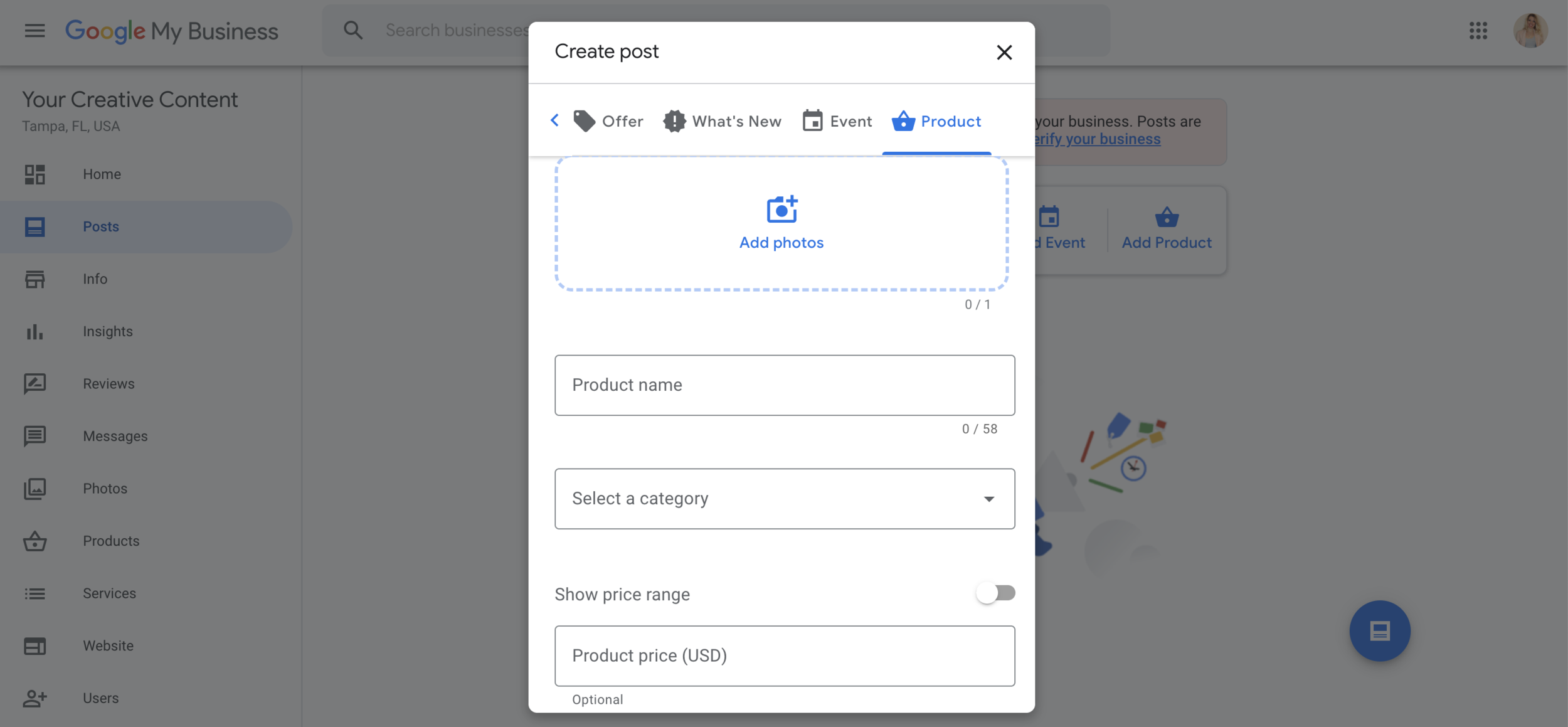
If you’re looking to increase your business’s local recognition, you’ll definitely want to get set up on Google My Business. When you search ‘coffee shops near me’ and those super convenient results pop up with popular coffee spots in the area, that’s Google My Business at work.
And you want your very own convenient Google results, right?
Not only does this make your business more accessible to people on Google, but it also gives your website a huge SEO boost. More people will begin to click on your website if your business shows up in those top search results.
However, it’s crucial that you keep your Google My Business information up to date. If your hours and phone number are inaccurate, it shows Google and your potential clients that you’re not so trustworthy after all. Yikes!
Google My Business is especially important for local businesses. It’s a place for people to leave reviews and post photos of your product or brick-and-mortar location. I often give SEO tips for small businesses by encouraging them to start a blog. But GMB is the most beneficial for anyone looking to increase local notoriety.
And the biggest takeaway you need to get from setting up GMB is the ability to inject keywords into the posts or images on your page. So let’s get into that next.
RELATED: 4 Reasons You Don't Need a Blog
Step 2: Geotag Your Images
It’s time to think of Google as your trusted BFF that you tell everything to.
Well— almost everything.
The more information about your business that you give to Google, the better your search ranking will be. With more information, Google’s fancy search engine algorithm feels more confident about getting you on the coveted first page.
Geotagging the images you use in your blogs is a great way to give Google what it wants. Because Google My Business relies on your business’s location on Google Maps, the two go hand in hand. So, the more geotagged images you have, the more likely it is that you’ll rank higher in SEO.
If you’re wondering what the heck I’m talking about, allow me to explain:
To geotag your images, you can use GeoImgr. And, like my favorite SEO tips for small businesses, it’s free!
We’re in this together, people!
Basically, all you need to do is upload your image to GeoImgr, add your Longitude and Latitude coordinates, add your keywords, and click “Write EXIF Tags.” Then, download the newly geotagged image.
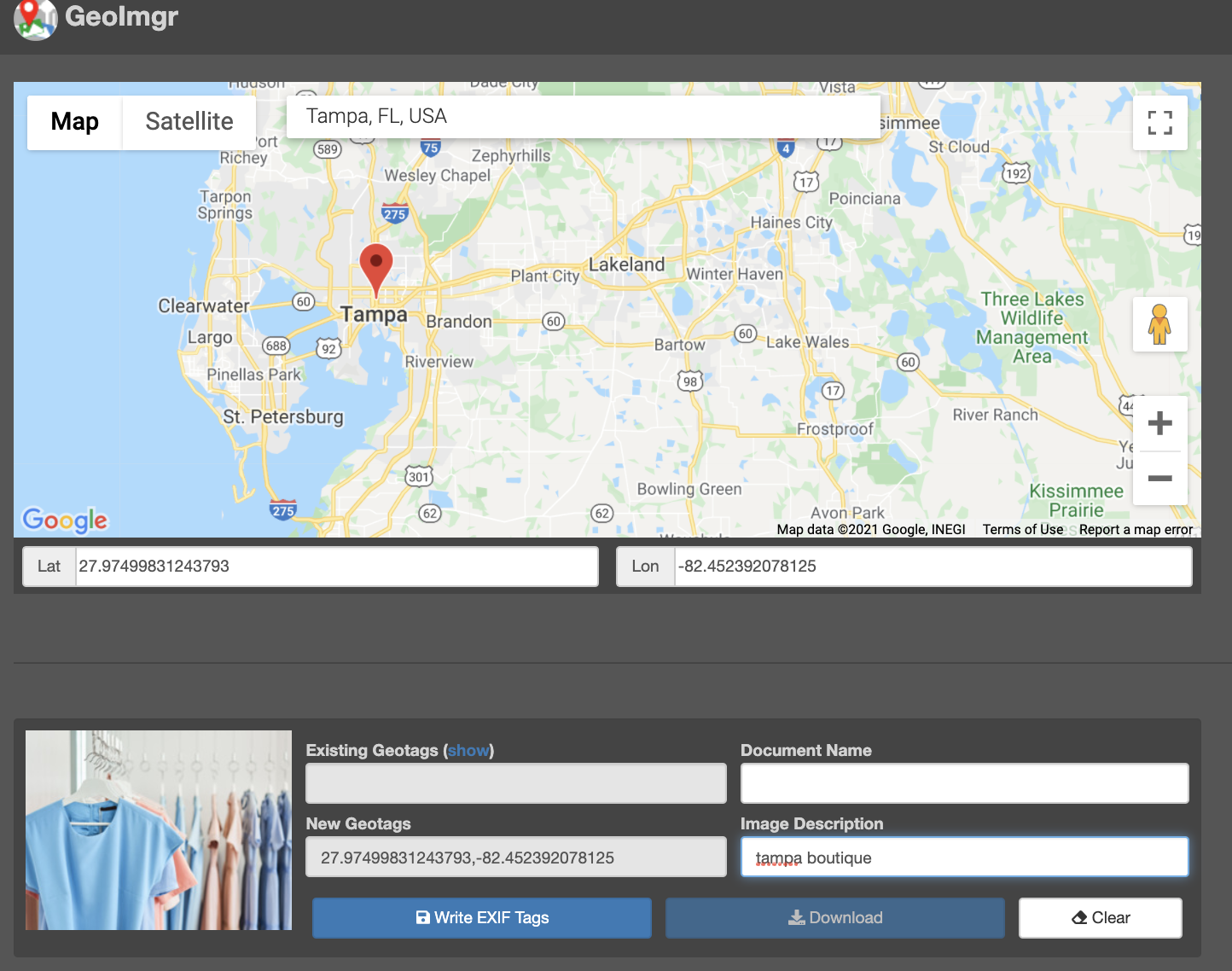
Once it’s on your computer, rename the image file so that it includes your keyword that describes the image.
For example, let’s say you’re a local boutique shop owner in Tampa, Florida. If you want to be one of the first people to show up when someone searches “Tampa boutiques” then you should add that keyword behind your images. That keyword (“Tampa boutiques”) gets 590 monthly searches every month, which can really boost your online (or in-person) sales!
Once it has a geotag and you’ve added your keywords, reupload the image file to your blog or Google My Business.
Just like that, your business images are literally on the map!

Step 3: Local Keyword Research
Speaking of SEO keywords, you want to think local when choosing one for your blog or your images. Always try to include the city where your business is located in your keyword. This will make it easier for local clients to find you, and it will also help narrow down search results so that you’re closer to the top.
For example, the keyword ‘Tampa media marketing’ yields a low search volume of 20 monthly searches. That would make it pretty easy to land your business on Google’s first page. However, it also means that barely anyone is searching these keywords in Google every month. Instead, you want to use an SEO keyword such as ‘Tampa marketing agency’ which has 590 monthly searches according to Ubersuggest.
Think of all the potential clients!
So obviously, these SEO tips for small businesses are going to sound like a foreign language. It's actually pretty straightforward, but you can always hire an SEO expert like me for some consulting or put it into practice. If you're more of a DIYer, I recommend using these localized keywords in your website's copy, blogs, and social media hashtags. This will make it easier for you to establish your local presence and bring new clients your way.
RELATED: How to Create Consistent Content when You Have a Job
Step 4: Publish SEO Blogs
Harness your SEO powers to publish optimized blogs on your website and watch your web traffic multiply.
However, don’t just write blogs for the sake of SEO. Use them as an opportunity to connect with your customers and clients!
Create content that will help your ideal clientele understand what you do and how your business works. This will help garner the like, know, and trust between you and your customers, which is vital to building your small business.
Writing to your niche in a localized way increases your potential ranking on Google’s first page. For example, if that boutique shop owner publishes a blog about the best local boutique shops in Tampa, Florida, it will undoubtedly land them on Google’s front page (sometimes just on the first try!).
And if you want to branch out of the local market to make national sales, you can pick SEO keywords with even more potential. “Summer outfit ideas” can get that boutique shop owner 5,400 new website visitors every month if their blog does well (and it will with SEO).
RELATED: Debunking the Myths of Being a Blogger
Step 5: Influencer Marketing and SEO
Social media influencers cornered the emerging digital market by captivating followers with aesthetically pleasing, entertaining content. Love ‘em or hate ‘em, they’re not going anywhere anytime soon.
And that’s why they’re a must in my SEO tips for small businesses.
Let’s be honest; it’s hard to scroll past a perfectly filtered Instagram photo without envy. Many social media influencers build their entire careers on tapping into that little green monster living in all of us. If they have it, we want it!
Reach out to influencers, get your business on their feeds, and say hello to that SEO you’ve been dreaming about. If an influencer bumps your business on their accounts, their followers will be encouraged to search for your biz on Google, thus scaling up your SEO ranking.
Plus, you’ll start to see growth in your own follower count. More social media followers mean more people to market your business to!
Influencer marketing also gives you user-generated content, which provides you with even more marketing material for your business. If potential consumers see that someone else trusts your product or service, they’ll feel more inclined to buy what you’re selling. In fact, 79% of people say that user-generated highly impacts their purchasing decisions.
If you put together a social media campaign, ask them to prompt their audiences to leave you a Google review (if they’ve tried and like your business). Whatever you do, don’t ask influencers to write a review in exchange for a product or service. Getting authentic Google reviews is key to establishing trust with your potential clients.
If you still need convincing, influencer marketing can create an authentic, tight-knit community between you and other small business owners. With a strong team of fellow business owners behind you, failure is close to impossible. Teamwork makes the dream work around here!